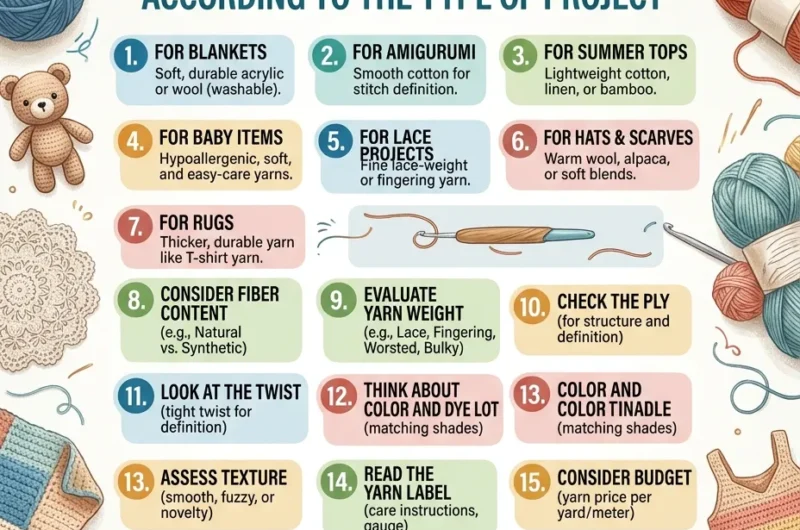
1. Start by thinking about the final project first
Before you even touch the yarn shelf, picture what you’re making. A cozy blanket, a summer top, or a stuffed toy all need very different yarns. This step saves you from ending up with something too stiff or too flimsy for your idea. I once picked a super thick yarn for a light summer shawl just because it looked pretty, and I ended up with something that felt like a carpet. Always match the yarn to the end result in your mind first.
2. Match yarn weight to your project size and structure
Yarn weight is basically how thick or thin your yarn is, and it changes everything. Fine yarns work well for delicate pieces, while chunky yarns are great for quick, warm projects. If you ignore this, your project might end up too heavy or too loose. A good habit is to check the recommended weight in your pattern before buying anything.
3. Choose the right fiber for comfort and use
Cotton, wool, acrylic… each fiber behaves differently. Cotton is great for breathable summer items, wool is warm and stretchy, and acrylic is budget-friendly and easy to care for. I learned the hard way that wool sweaters and hot climates don’t mix well at all. Think about who will use the item and in what conditions.
4. Check how the yarn behaves after washing
Some yarns shrink, stretch, or lose shape after washing, and that can ruin your work if you’re not careful. Always look at the label instructions or test a small swatch. I once made a baby blanket that turned into a slightly smaller baby blanket after its first wash. A quick test swatch can save you from that surprise.
5. Feel the texture before committing
Even if a yarn looks perfect, the feel matters a lot. Some yarns are soft and smooth, others are rough or split easily while crocheting. If possible, touch it before buying. If you’re ordering online, check reviews about texture. There’s nothing worse than spending hours crocheting something that feels uncomfortable in your hands.
6. Consider the stitch definition you want
Some yarns make stitches pop beautifully, while others blur them together. If you’re doing detailed stitch patterns, go for yarn with good stitch definition like smooth cotton or tightly spun acrylic. I once used a fuzzy yarn for a complex pattern and honestly… I couldn’t even see my own stitches anymore.
7. Think about durability if the item will be used often
If you’re making something like bags, cushions, or kids’ toys, durability matters more than softness. Acrylic blends or tightly spun cotton usually last longer under daily use. I’ve had projects fall apart faster than expected just because I chose softness over strength.
8. Pay attention to yarn thickness consistency
Some cheaper yarns are not perfectly even, which can make your project look messy or uneven. Try to choose yarn that looks uniform throughout the skein. I remember crocheting a scarf where the thickness kept changing slightly, and it ended up looking “handmade” in a not-so-good way.
9. Match yarn color with lighting and environment
Colors can look very different in natural light versus store lighting. A perfect beige in the shop might look yellow at home. Always double-check under natural light if possible. I once bought a “soft pink” that turned out to be closer to neon peach under sunlight.
10. Buy enough yarn from the same dye lot
Even if the color name is the same, different dye lots can have slight variations. That difference becomes very noticeable in large projects. Always buy extra from the same batch just in case. I’ve had to unravel half a project before because I ran out and couldn’t find the exact same shade again.
11. Always swatch before starting the real project
A small test square can tell you everything: tension, drape, stitch clarity, and even how the yarn behaves with your hook size. It feels like an extra step, but it actually prevents frustration later. I used to skip swatches and jump straight into projects, and I ended up restarting more times than I care to admit.
12. Match yarn to your crochet hook size properly
Even the best yarn can behave badly if your hook doesn’t match it. Too small a hook makes your work stiff, too large makes it loose and messy. Most yarn labels suggest a hook size range, and sticking to it usually gives you the cleanest results. I once ignored this and my “blanket” ended up looking more like a fishing net.
13. Consider the drape depending on the project type
Drape is how the finished fabric hangs or flows. For clothing, you want soft drape; for baskets or structure pieces, you want firmness. The same yarn can behave differently depending on stitch and tension, so think about movement before choosing. A stiff yarn for a dress project is a quick way to make something unwearable.
14. Look at yarn ply and structure for smoother stitching
Yarn that is tightly plied (twisted strands) is usually stronger and easier to work with, while loosely spun yarn can split easily. If you’ve ever fought with a yarn that keeps separating mid-stitch, you already know why this matters. Personally, I prefer 3–4 ply yarns because they keep my stitches cleaner and my patience intact.
15. Think about ease of maintenance for the final item
Some yarns require hand washing, while others can go straight into the machine. If you’re making something practical like a blanket or clothing, easy-care yarns save a lot of time. I once gifted a handmade scarf that required special washing instructions, and I could tell it wasn’t exactly “daily use friendly.”
16. Check yarn elasticity if your project needs stretch
Projects like hats, socks, and fitted garments need yarn that has some natural stretch. Wool and wool blends are usually great for this, while cotton tends to stay rigid. If you choose the wrong type, the item might not hold its shape properly. I made a cotton beanie once… it fit more like a bowl than a hat.
17. Be mindful of yarn softness for skin-contact projects
If the item touches skin directly, like baby clothes or scarves, softness becomes a priority. Some yarns look beautiful but feel scratchy after a while. It’s worth taking a moment to test it against your wrist or neck before deciding. Comfort always wins over appearance in these cases.
18. Compare price vs quantity carefully before buying
Sometimes a yarn looks cheap, but the skein is so small you end up needing much more than expected. Always check yardage or meterage instead of just price. I’ve been tricked by “budget deals” that ended up costing more than premium yarn in the long run.
19. Choose yarn with consistent dye quality for big projects
If you’re making something large like a blanket or cardigan, color consistency matters a lot. Even small shade variations can become obvious across a wide surface. Stick to reputable brands or buy all skeins from the same batch when possible. I learned this after finishing a blanket that looked slightly “striped” without me planning it.
20. Trust your hands as much as the label
At the end of the day, no label knows your project better than you do. If a yarn feels right, works smoothly with your hook, and inspires you, that’s a strong sign. Technical rules help, but crochet is also about comfort and creativity. Some of my best projects came from simply choosing what felt enjoyable to work with rather than what was “technically perfect.”