1. Start With the Right Tension
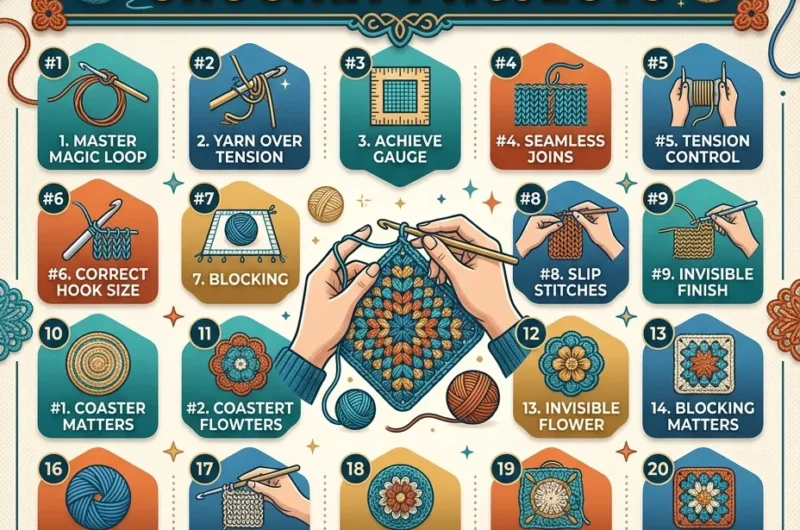
Getting your tension right from the beginning changes everything. If it’s too tight, your work curls; too loose, it looks messy. Try making a small swatch before starting your project. I remember once skipping this step and ending up with a scarf that could fit a giant instead of a human.
2. Use Stitch Markers Like a Pro
Stitch markers are tiny lifesavers. They help you keep track of rounds, increases, and pattern repeats without constantly counting. A simple tip: if you don’t have markers, a piece of yarn works just fine. I’ve used scrap thread more times than I can count when I misplaced mine.
3. Master the Magic Circle Early
The magic circle is the foundation of most round crochet projects. It gives you a tight, clean center with no hole. At first it feels tricky, but once you get it, you’ll never go back. I still remember the satisfaction of finally getting mine right after several failed attempts.
4. Keep Your Yarn Consistent
Switching yarn brands or dye lots mid-project can mess up the look. Even small shade differences show up clearly in bigger pieces. Always buy a bit extra than you think you need. I once ran out halfway through a project and spent days hunting for the same shade again.
5. Learn to Read Your Stitches
Instead of always relying on patterns, learn to “see” your stitches. It makes fixing mistakes much easier and speeds up your work. At some point, you’ll notice you can spot errors just by glancing at your piece, which feels almost like a superpower.
6. Block Your Finished Pieces
Blocking can completely transform your crochet work. It smooths edges, shapes stitches, and gives a professional finish. A simple spray of water and pinning it down can make a huge difference. I once thought my project looked bad until I blocked it—it turned out I just hadn’t finished it properly.
7. Count as You Go
Counting stitches might feel slow, but it saves you from unraveling later. Try checking every few rows instead of waiting until the end. I’ve had to redo entire sections because I got “confident” and stopped counting too early.
8. Use Ergonomic Hooks for Longer Sessions
If you crochet often, hand fatigue is real. Ergonomic hooks make a big difference, especially for larger projects. Once I switched, I noticed I could crochet much longer without that annoying wrist pain.
9. Keep Your Edges Neat From the Start
Messy edges can ruin an otherwise perfect project. Pay attention to your first and last stitch of every row. A small adjustment early on saves you a lot of fixing later. I used to ignore this and always regretted it at the end.
10. Practice Pattern Repeats Until They Feel Natural
Instead of constantly checking instructions, repeat sections until they become muscle memory. This speeds up your workflow and reduces mistakes. I like to think of it as your hands learning their own rhythm—it eventually feels effortless.
11. Choose the Right Hook Size for the Job
The hook size can completely change your project’s look and feel. A slightly bigger hook gives a softer drape, while a smaller one makes tighter, firmer stitches. I once used the wrong hook for a blanket and ended up with something that felt like cardboard instead of something cozy.
12. Don’t Ignore Yarn Weight Labels
Yarn labels are more useful than they look. They tell you how thick the yarn is and what hook it pairs best with. Matching them properly saves you a lot of guessing. I used to ignore this and wondered why my projects never matched the photos in patterns.
13. Work in Good Lighting
Crochet mistakes love hiding in shadows. Good lighting helps you see stitches clearly and reduces eye strain. Natural light is best, but a simple desk lamp works wonders too. I realized this after undoing half a project because I misread stitches at night.
14. Learn to Fix Mistakes Without Panicking
You don’t always need to start over when something goes wrong. Most mistakes can be undone stitch by stitch. The first time I frogged a project, I thought I had ruined it, but it actually made me more confident to experiment.
15. Keep Your Yarn Tangle-Free
Tangled yarn can slow you down and ruin your flow. Use a yarn bowl or even a simple bag with a small hole. I’ve had moments where I spent more time untangling than crocheting, and it’s never fun.
16. Break Big Projects Into Small Goals
Large projects can feel overwhelming if you think of them as one big task. Instead, focus on small sections like “finish two rows” or “complete one motif.” I finish projects faster when I stop thinking about the whole blanket at once.
17. Use Consistent Starting Chains
Your foundation chain sets the tone for everything else. If it’s too tight, the whole project shrinks at the bottom. Try using a slightly larger hook just for the starting chain. This small trick saved me from many frustrating uneven edges.
18. Weave Ends As You Go
Leaving all your loose ends for the end makes finishing feel like a nightmare. Weaving them in as you go keeps things clean and manageable. I used to ignore this and always regretted it when I had a pile of threads staring at me at the finish line.
19. Keep a Small Crochet Kit Handy
Having scissors, stitch markers, and a small hook case nearby saves time and stress. It keeps you from constantly searching for tools mid-project. I once spent 20 minutes looking for scissors only to find them in my pocket.
20. Enjoy the Rhythm Instead of Rushing
Crochet improves most when you stop rushing and get into a steady rhythm. Speed comes naturally over time, but quality comes from patience. The best pieces I’ve made were when I wasn’t trying to finish fast, just enjoying each stitch.
21. Swatch Before Every New Pattern
Even if you think you understand the pattern, a quick swatch can save you from sizing disasters. It helps you see how your yarn behaves with that specific stitch. I’ve skipped this before and ended up with a sweater that fit more like a crop top than intended.
22. Keep Your Stitch Count in Your Head While Working
Instead of constantly recounting from the start, try grouping stitches in small mental blocks (like 5s or 10s). It makes tracking easier and faster. I started doing this when I got tired of losing my place halfway through long rows.
23. Rotate Your Work Often
Don’t always crochet in the same position or direction. Rotating your work helps you see mistakes early and reduces strain on your hands and wrists. I noticed my tension improved just by turning my project more frequently instead of forcing one angle.
24. Use Contrast Stitch Markers for Important Points
Not all stitch markers should be the same. Use different colors or types for key points like beginnings of rounds or increase sections. This tiny change prevents a lot of confusion later. I once mixed everything up in a complex pattern and wished I had done this earlier.
25. Stop at the Right Moment, Not Just When You’re Tired
Ending a crochet session mid-pattern section is better than stopping at a confusing transition point. It makes it easier to resume without mistakes. I learned this after picking up a project days later and having no idea where I was in the pattern.